 Lumivox
Dairy Alternatives in Recipes
Introduction
Dairy products are fundamental ingredients in British home cooking. They serve multiple functions in recipes: providing richness and flavor, creating texture through emulsification, and contributing structure in baking. Different dairy products have substantially different nutritional compositions, and understanding these variations provides context for how recipes can be prepared in different ways.
Energy Density Variation in Dairy Products
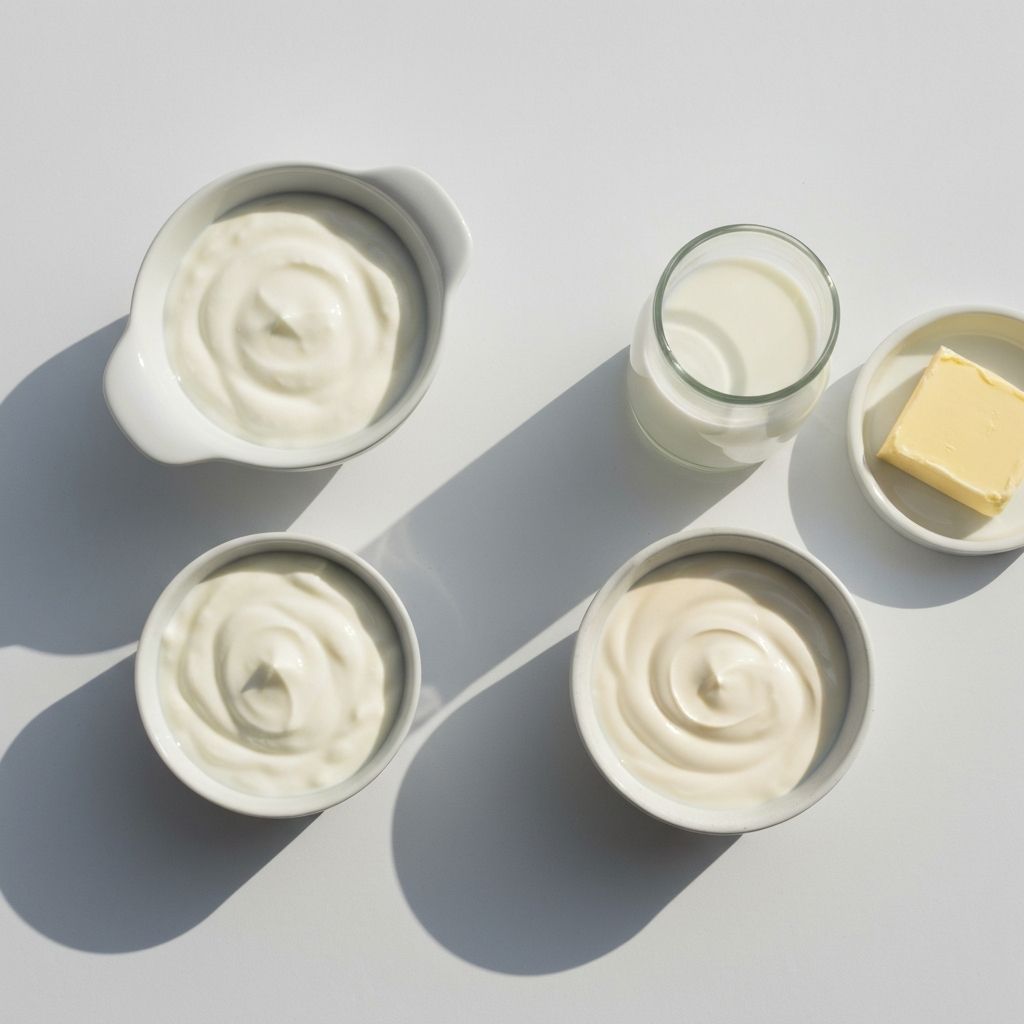
Dairy products vary dramatically in fat content and energy density. Double cream contains approximately 450 calories per 100ml. Single cream contains approximately 200 calories per 100ml. Full-fat milk contains approximately 60 calories per 100ml. Yogurt varies depending on fat content: full-fat yogurt contains approximately 60 calories per 100g, while Greek yogurt contains approximately 60-100 calories per 100g depending on the type.
These are substantial differences in energy density based on fat content. Fat comprises about 35% of double cream, 18% of single cream, and 3.5% of whole milk.
Cream-Based Sauces and Alternatives
Traditional British cooking frequently uses cream in sauces and gravies. A sauce made with double cream has a substantially higher energy density than one made with single cream or yogurt-based alternatives. All these options produce flavorful sauces; they simply have different nutritional compositions.
The visual appearance and general cooking behavior differs slightly between these alternatives due to different fat and water content. Some cooks prefer the flavor and texture of cream-based sauces; others use alternative bases. Both approaches are found in British home cooking.
Milk-Based Products
Milk serves as a base for sauces, in cooking liquids for grains, and in baking. Different types of milk have different fat contents: whole milk (~3.5% fat), semi-skimmed milk (~1.5% fat), and skimmed milk (~0.1% fat). These contain approximately 60, 45, and 35 calories per 100ml respectively.
Using different milk types changes the nutritional composition of finished dishes while maintaining similar functional properties in cooking.
Cheese in British Cooking
Cheese is used in British cooking in gratins, in sauces, on baked dishes, and as an ingredient in traditional recipes. Cheddar cheese contains approximately 400 calories per 100g. Cottage cheese contains approximately 100 calories per 100g. Cream cheese contains approximately 340 calories per 100g.
These dramatic differences in energy density reflect different production methods and fat content. Using smaller quantities of strong-flavored cheese, or using lower-fat cheese alternatives, changes the nutritional composition while maintaining some of the flavor contribution.
Yogurt in Contemporary British Cooking
Yogurt has become increasingly common in British cooking as both a cooking ingredient and in place of cream in certain applications. Greek yogurt provides a thick texture somewhat similar to cream with different nutritional composition. Plain yogurt has a distinctive flavor but works in many applications traditionally using cream.
Home cooks experiment with yogurt-based preparations, creating traditional dishes with different nutritional profiles. This represents a natural evolution of home cooking practices.
Functional Differences in Cooking
While different dairy products have different energy densities, they sometimes function differently in cooking due to water and fat interactions. High-fat cream is stable in certain sauces where lower-fat milk might separate. Understanding these differences helps cooks work with different dairy options effectively.
Flavor Contributions
Different dairy products contribute different flavors. Full-fat cream has a rich, distinctive taste. Milk is more neutral. Yogurt has a tangy character. Greek yogurt has concentrated dairy flavor. Cheese provides strong, distinctive flavors. These sensory differences mean that recipes using different dairy bases will have noticeably different flavor profiles.
Historical Context
Traditional British cooking relied on available dairy products at different times in history. Contemporary British cooking incorporates a wider range of dairy options, both from traditional sources and newer products. This diversity reflects changing ingredient availability and contemporary cooking approaches.
Nutritional Considerations Beyond Energy
Beyond energy content, dairy products vary in their nutritional composition with respect to protein, calcium, and other nutrients. These compositional differences are relevant to nutritional science but do not change the basic fact that different dairy products have different energy densities.
Summary
Dairy products used in British home cooking vary dramatically in fat content and energy density. Double cream contains substantially more energy per unit volume than milk or yogurt. These differences are factual aspects of dairy food composition that directly impact the nutritional profile of recipes using different dairy components.