 Lumivox
Whole Grains in Traditional UK Sides
Introduction
Grains and starch-based side dishes form essential components of British home cooking. Understanding how different grain varieties interact with water and other ingredients during cooking provides context for understanding the nutritional composition of traditional British meals and their possible variations.
Rice in British Cooking
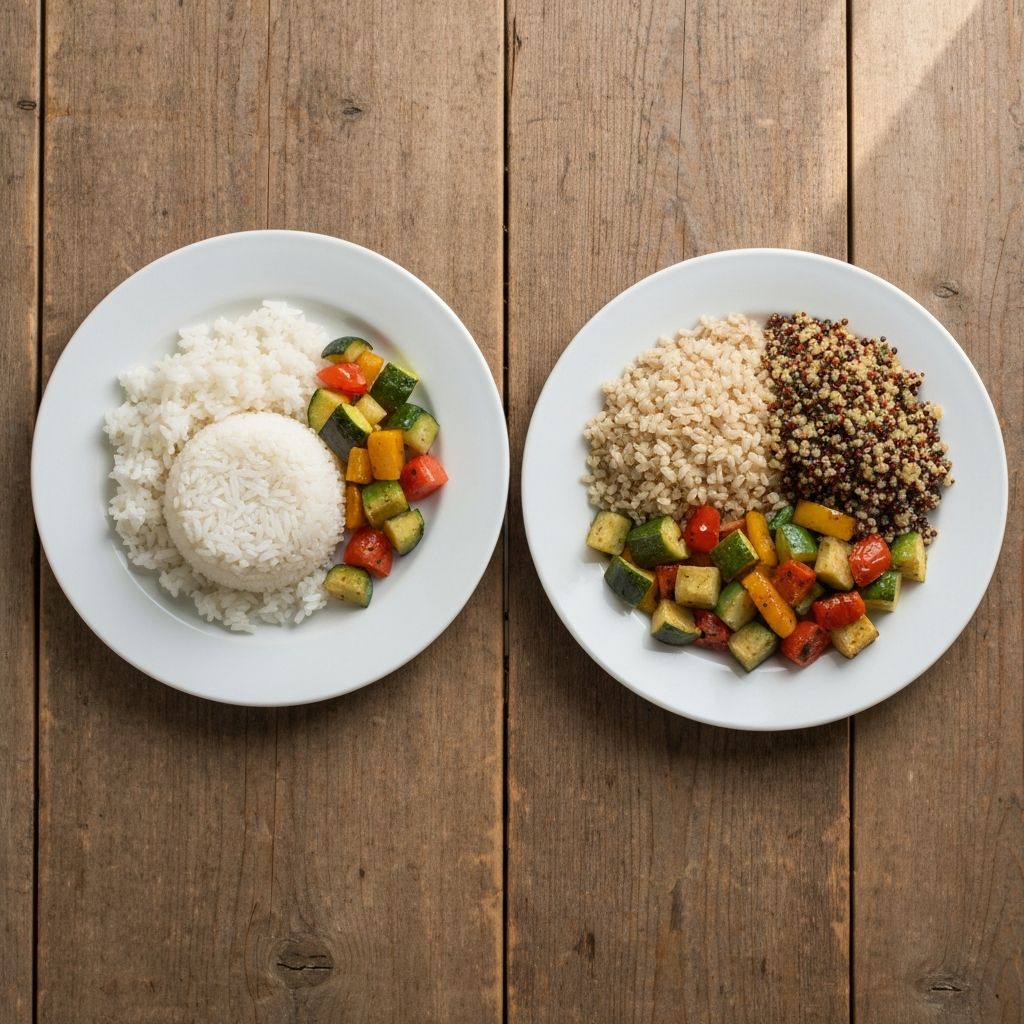
Both white and brown rice are used in contemporary British cooking. White rice is polished to remove the bran and germ layers. Brown rice retains these outer layers.
In their raw forms, both contain similar caloric content per 100g (approximately 130 calories). During cooking, however, they absorb different amounts of water. Brown rice absorbs more water during cooking due to the intact bran layer, resulting in cooked brown rice containing approximately 111 calories per cooked cup, while white rice contains approximately 205 calories per cooked cup. This difference results from water absorption, not from energy content differences in raw rice.
The fiber content differs between white and brown rice due to the bran retention in brown varieties. This is a factual nutritional difference reflected in nutritional composition data.
Wheat-Based Products
Bread is a traditional British staple available in various forms. White bread is made from refined wheat flour. Wholemeal bread is made from whole grains retaining the bran and germ. These bread types have different fiber content and different water absorption characteristics during baking.
Whole wheat bread typically contains approximately 80-100 calories per slice depending on bread thickness. White bread contains approximately 80 calories per slice of similar thickness. The differences relate to ingredients and preparation rather than inherent energy differences in wheat.
Other Grains in British Cooking
Barley is traditionally used in soups and stews in British cooking. Oats are used in porridge and baking. Both whole grain varieties retain their outer layers and consequently absorb more water during cooking, affecting final energy density.
Pasta, made from wheat, is increasingly common in British home cooking. Whole grain pasta and refined pasta have different nutritional compositions. Whole wheat pasta contains more fiber than refined pasta, reflecting the grain composition differences.
Water Absorption and Energy Density
The key principle affecting cooked grains is water absorption. Whole grains retain their bran layer, which absorbs water more readily during cooking. This means that a serving of cooked brown rice contains more water (and therefore less energy density) than the same weight of cooked white rice, despite starting from similar raw energy content.
Boiled or steamed grains absorb more water than baked grains, affecting the final energy density of cooked products.
Fiber Content Differences
Whole grain varieties contain more fiber than refined grain varieties. Fiber affects digestion, satiety, and various metabolic processes. These are factual differences in nutritional composition that reflect grain processing.
Fiber itself contains calories (approximately 2 calories per gram) but is not fully absorbed by the body in the same way as other carbohydrates. This is a nutritional science consideration affecting how different grains function metabolically.
Traditional British Preparations
Potatoes are the traditional British starch, used in numerous forms: boiled, mashed, baked, roasted, and fried. Potatoes absorb different amounts of fat depending on preparation method. Mashed potatoes made with butter and cream have higher energy density than boiled potatoes. Roasted potatoes with oil have higher energy density than steamed potatoes.
This variation in energy density relates to added fats rather than to the potatoes themselves.
Preparation Methods and Energy Density
Different preparation methods affect how much water is retained in cooked grains and how much fat is absorbed. Steaming and boiling retain water and add no fat. Baking may add small amounts of fat. Roasting or frying adds substantial fat. These differences directly affect energy density.
Portion and Serving Size
The energy contribution of grains depends on serving size. A small portion of rice or bread contributes relatively modest calories. Larger portions contribute more. The composition of meals changes based on grain portion sizes relative to vegetables, proteins, and other ingredients.
Contemporary British Preferences
Whole grain options have become more available and common in contemporary British shopping and home cooking. Both refined and whole grain options are widely available and used. This reflects changing ingredient availability and diverse preferences in home cooking.
Nutritional Composition Data
Detailed nutritional composition information about different grains is available from public nutritional databases and food composition tables. These provide factual information about energy, fiber, and other nutrients in different grain varieties and preparations.
Summary
Different grains and grain-based side dishes have different nutritional compositions reflecting both the grain variety (whole versus refined) and the preparation method. Water absorption during cooking affects energy density. Fat additions during preparation significantly affect energy density. These are factual aspects of how grains function in cooking.